

Tidbits · The Artemision
Little remains of the Wonder of the World in Ephesus. But its stones – so the story goes – still stand in Istanbul.
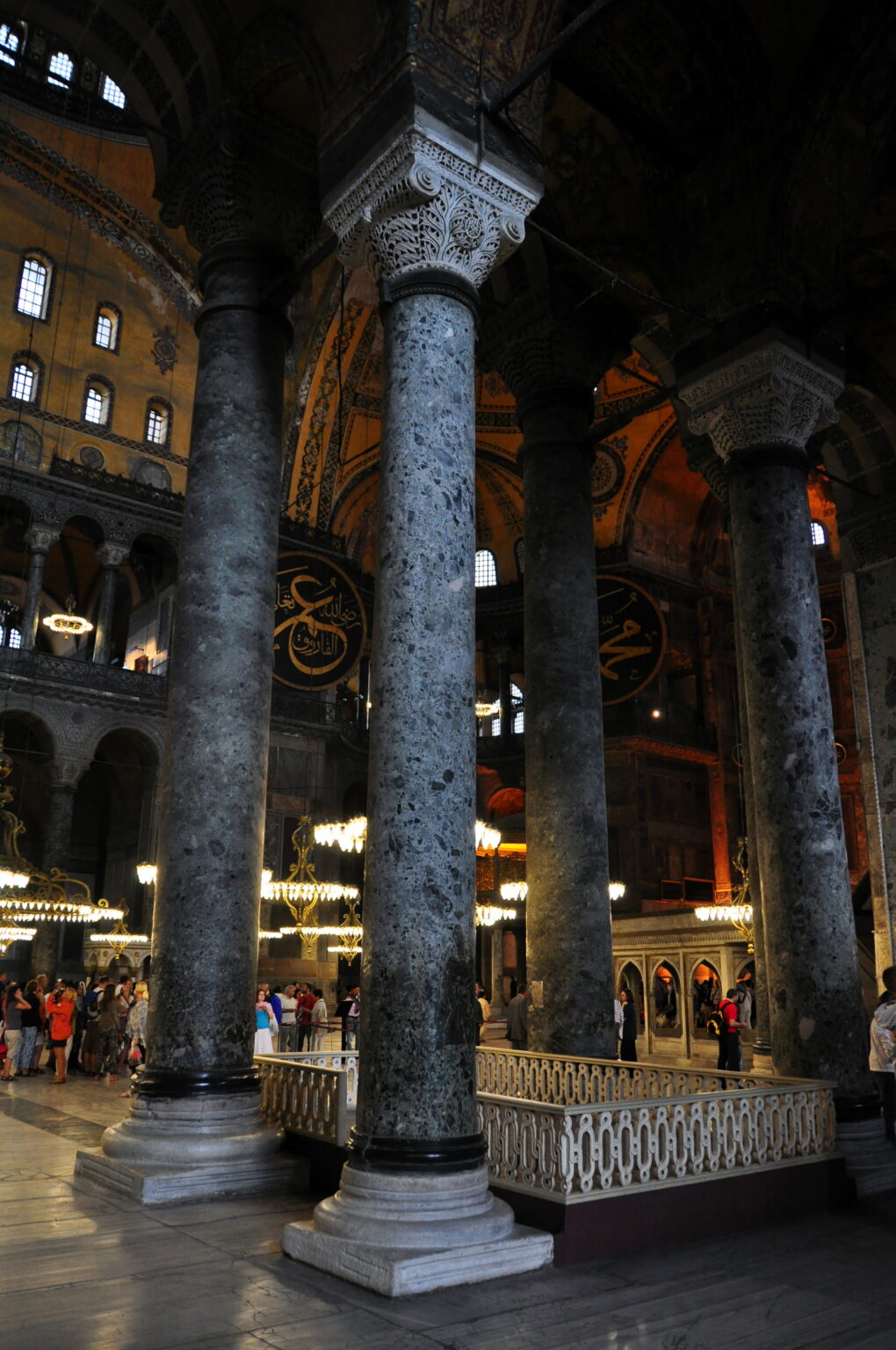
- Where: Hagia Sophia, Istanbul
- When: built AD 532–537 under Emperor Justinian
- What: marble and columns gathered from the whole empire
A Wonder that asks for imagination
To visit the site of the Temple of Artemis today is, at first, underwhelming: so little remains, and it takes a lot of imagination. In Istanbul, at the Hagia Sophia, you need no imagination at all to behold columns that – according to tradition – once belonged to one of the Seven Wonders of the World. Notice that each capital is unique, as befits the earthly dwellings of the goddess.
Built from the treasures of an empire
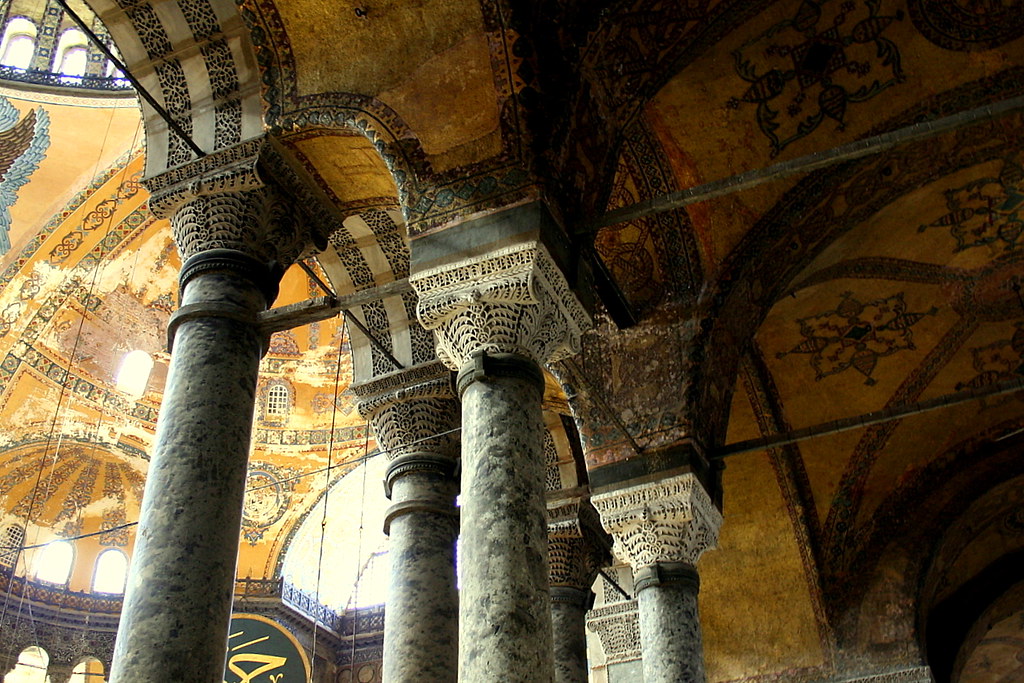
Emperor Justinian ordered every province of his realm to send its finest architectural pieces, so that the Hagia Sophia could be bigger and grander than anything before it. Columns and marbles were taken from ancient cities in Anatolia and Syria such as Aspendos, Ephesus, Baalbek and Tarsus.
The white marble came from the island of Marmara, the green porphyry from Euboea, the pink marble from Afyon and the yellow from North Africa. The walls were covered by splitting single marble blocks in two and opening them like a book, creating symmetrical patterns. Tradition says the columns of the naves came from the Temple of Artemis in Ephesus, while eight columns supporting the domes were brought from Egypt.


