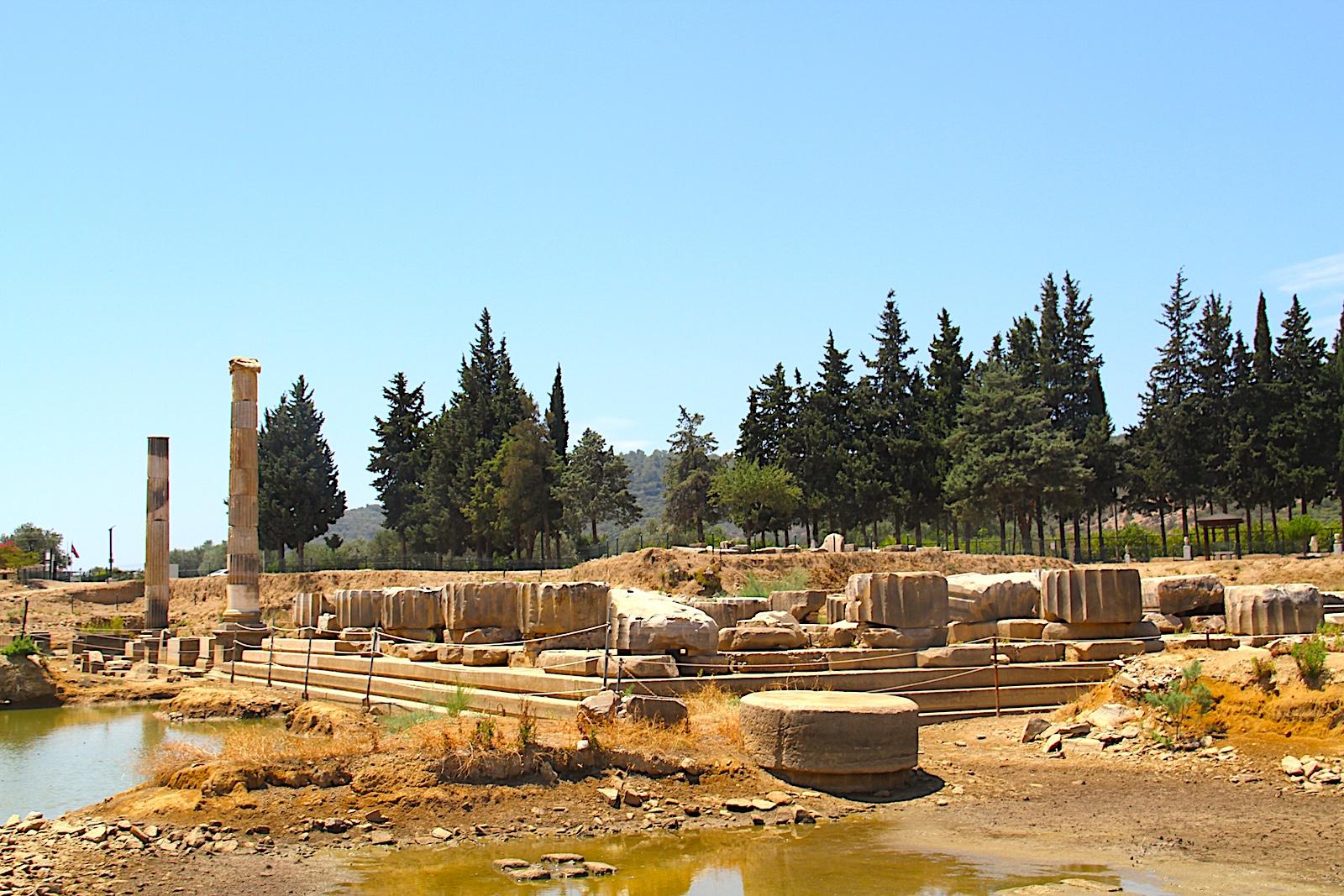
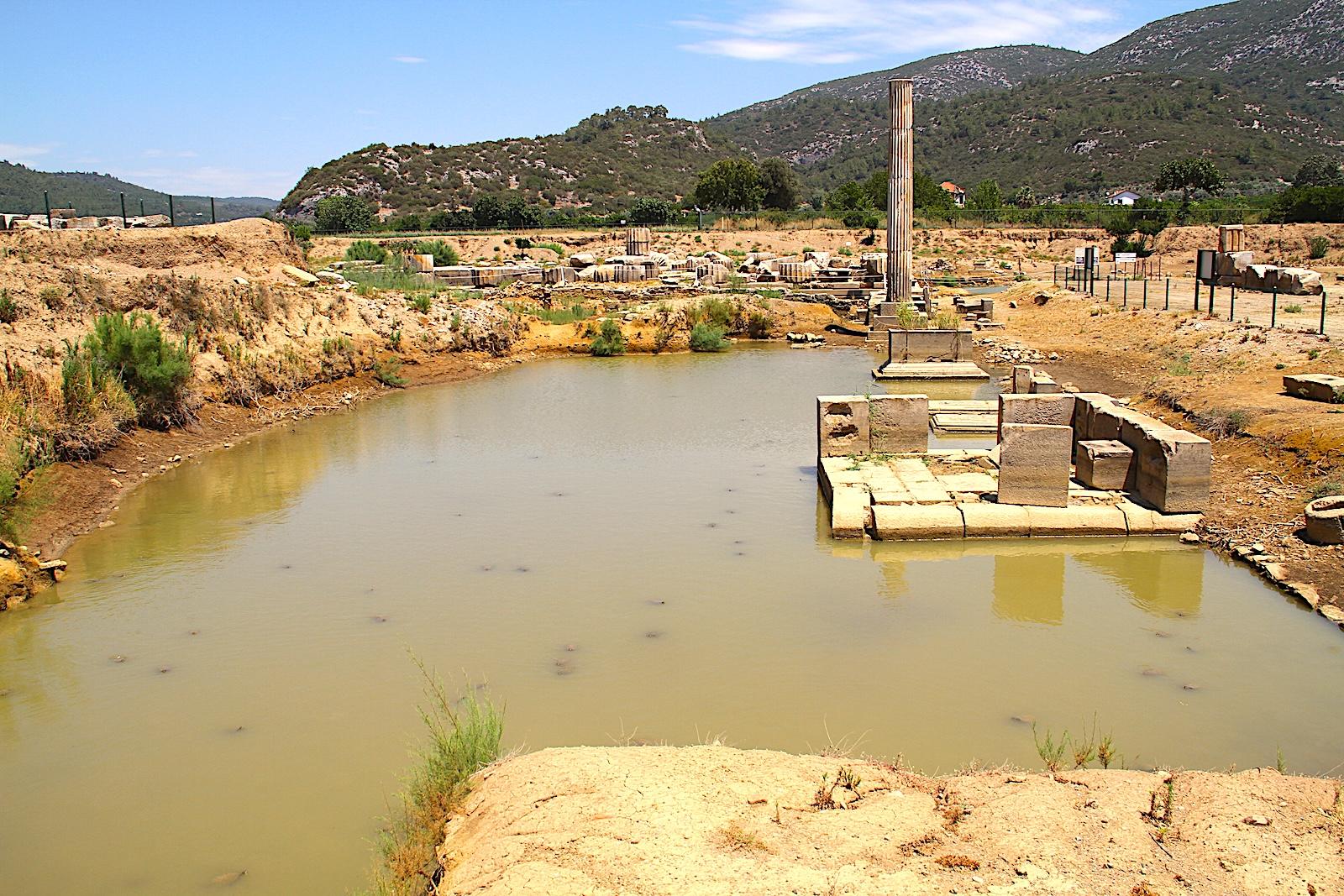
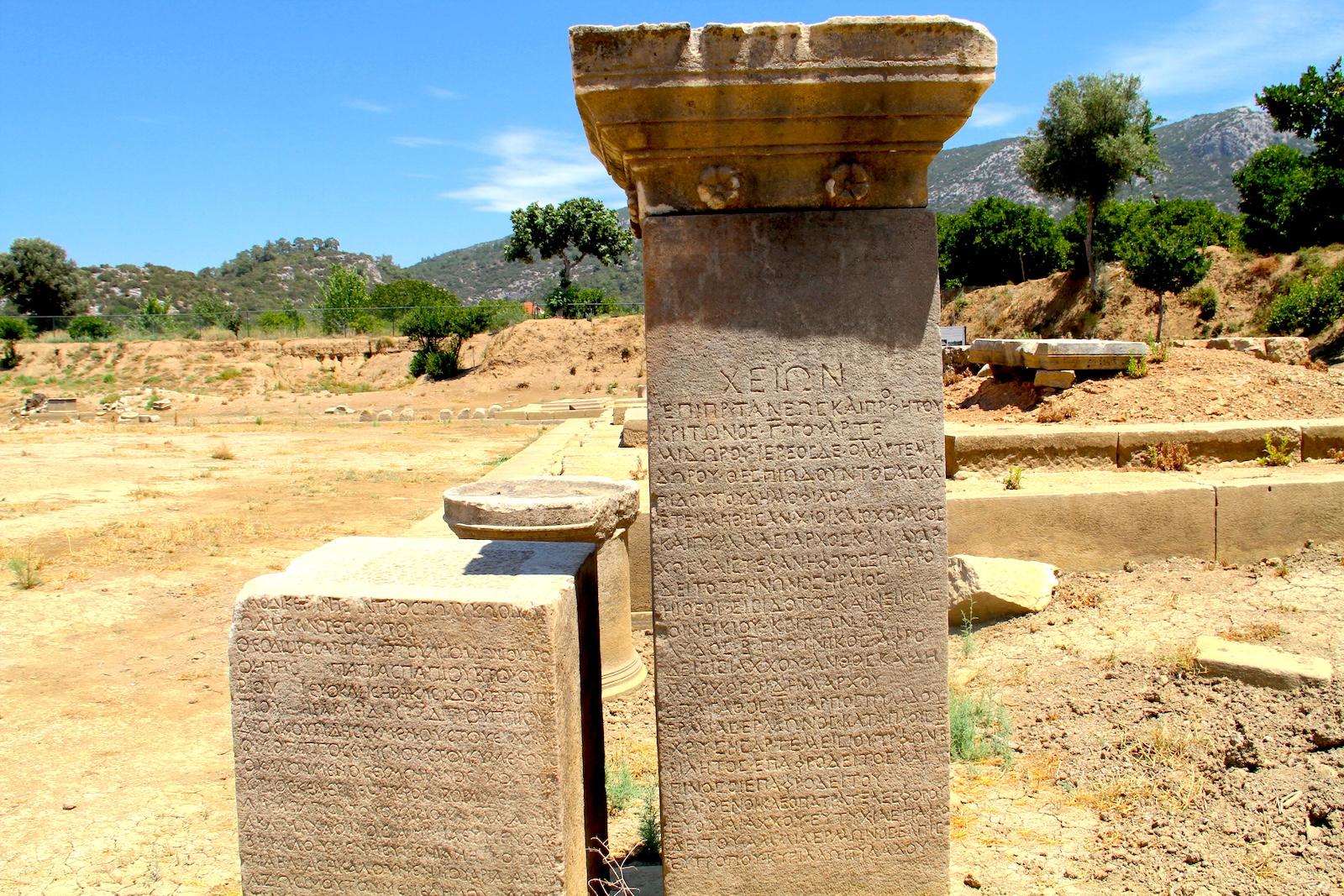
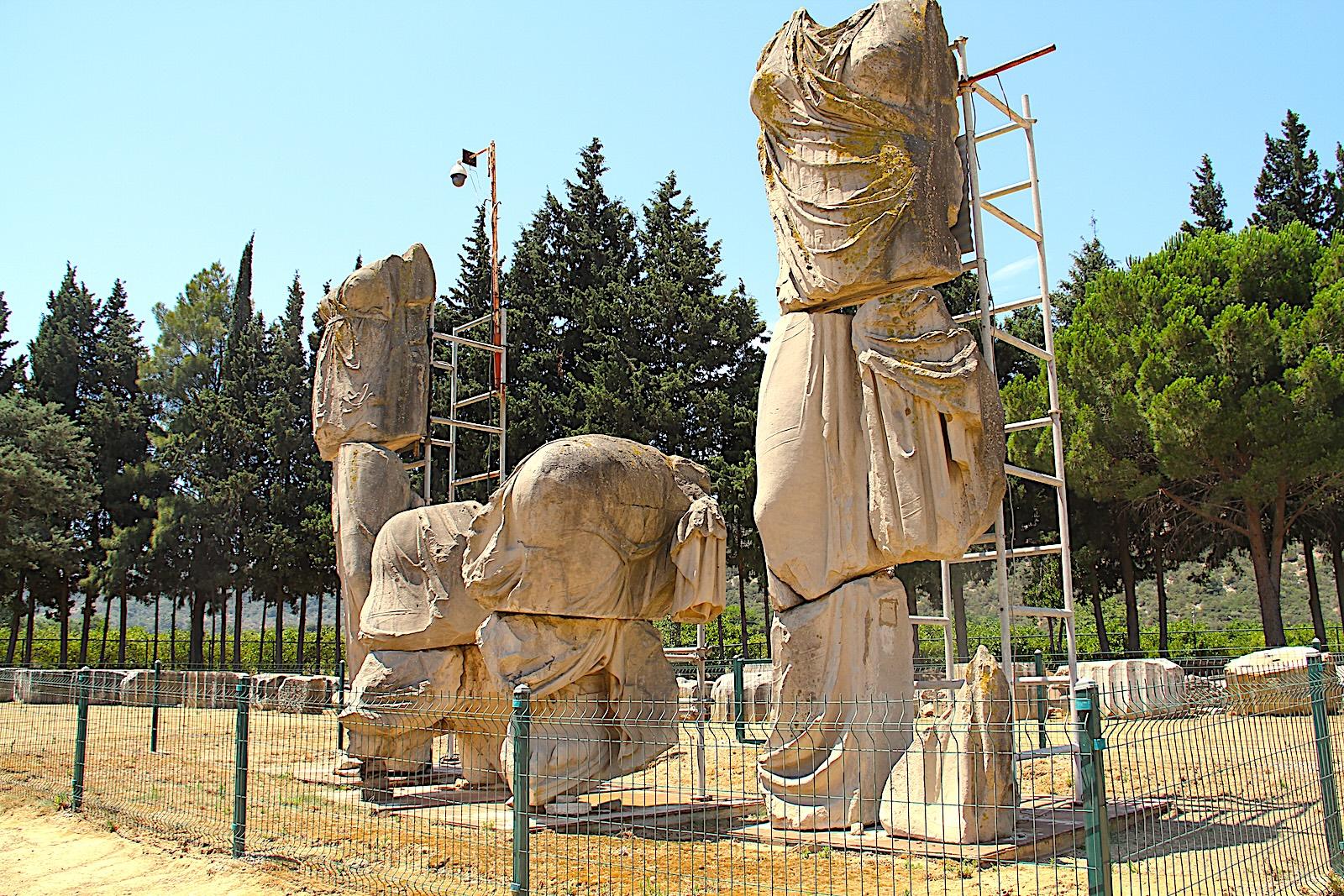
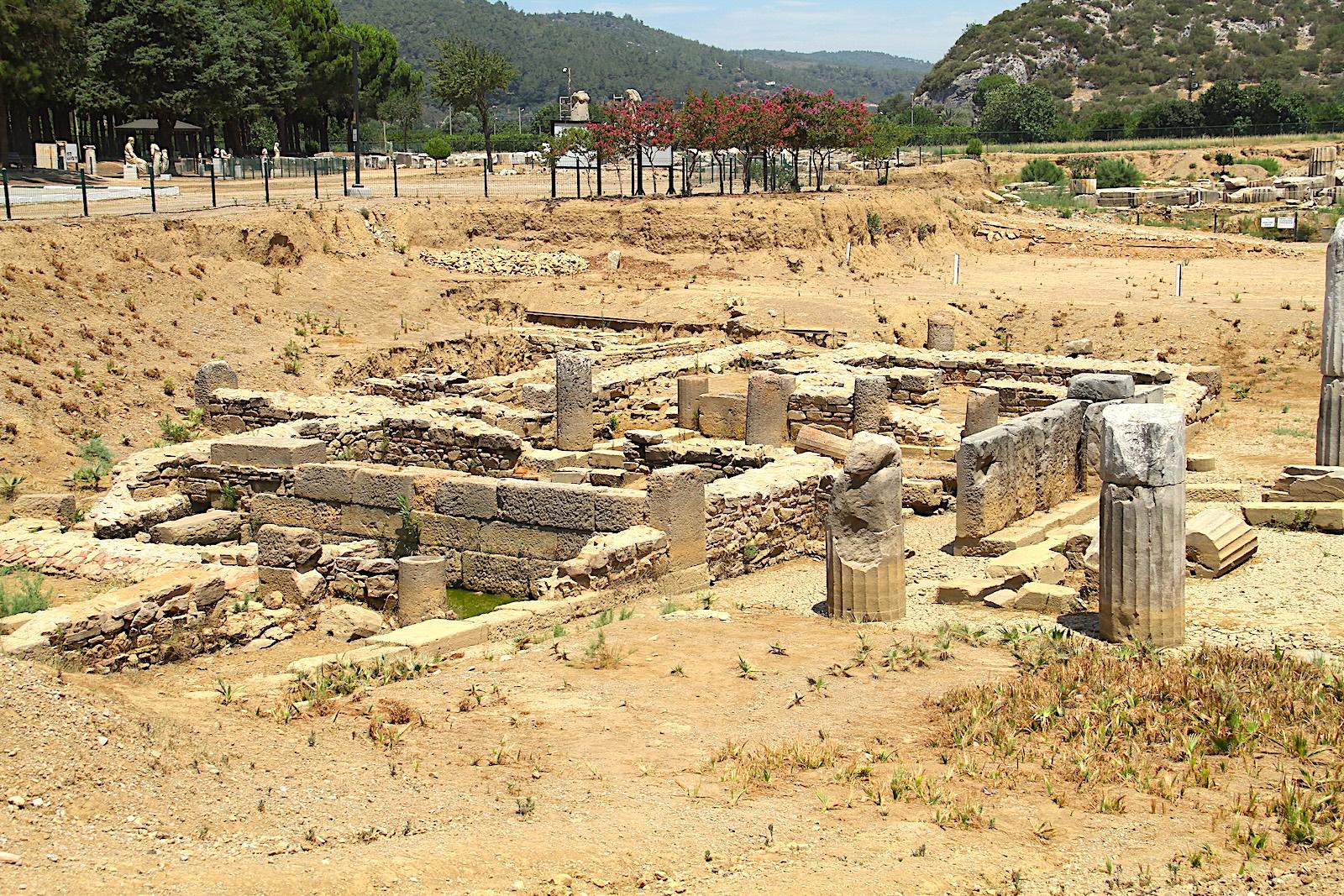
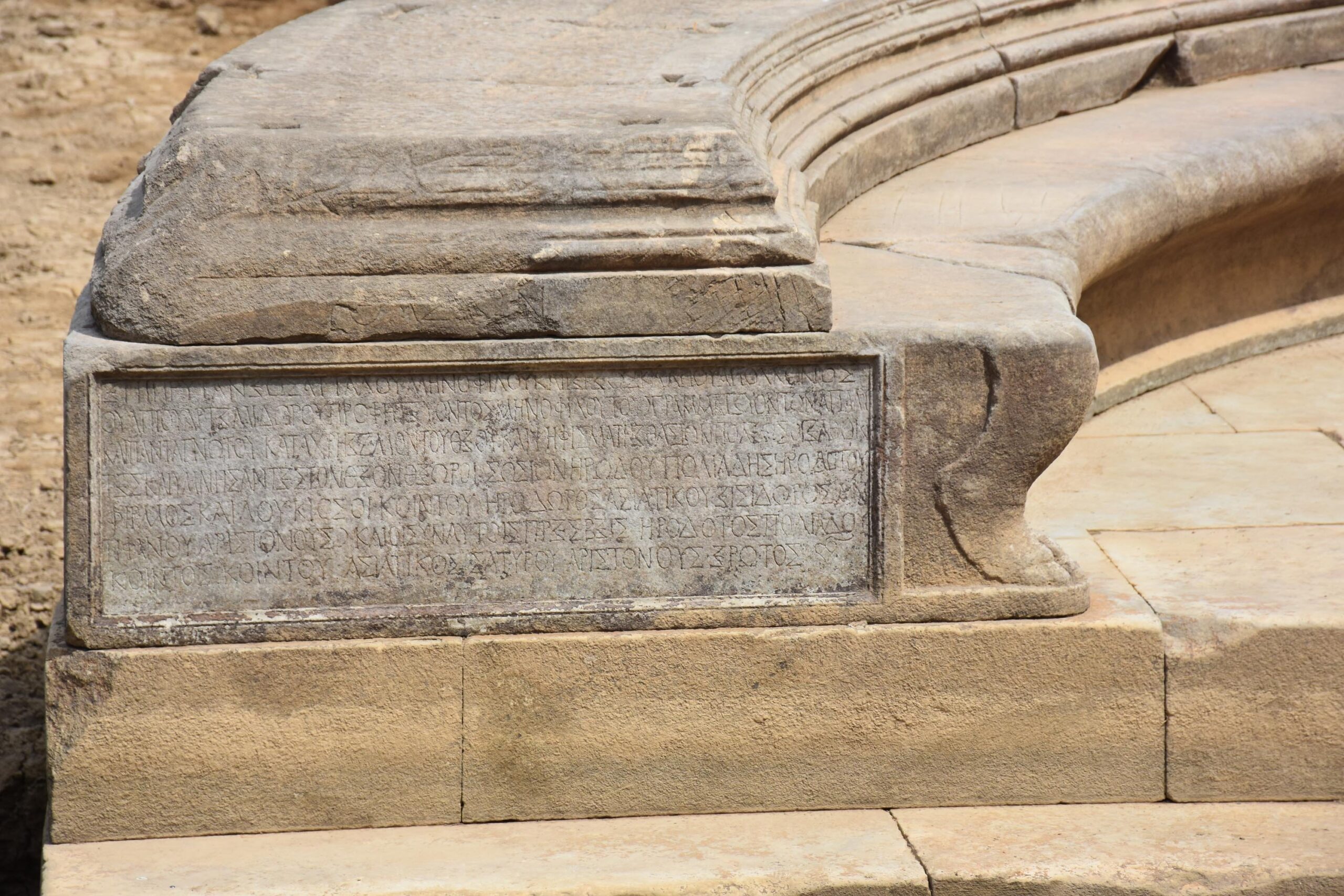
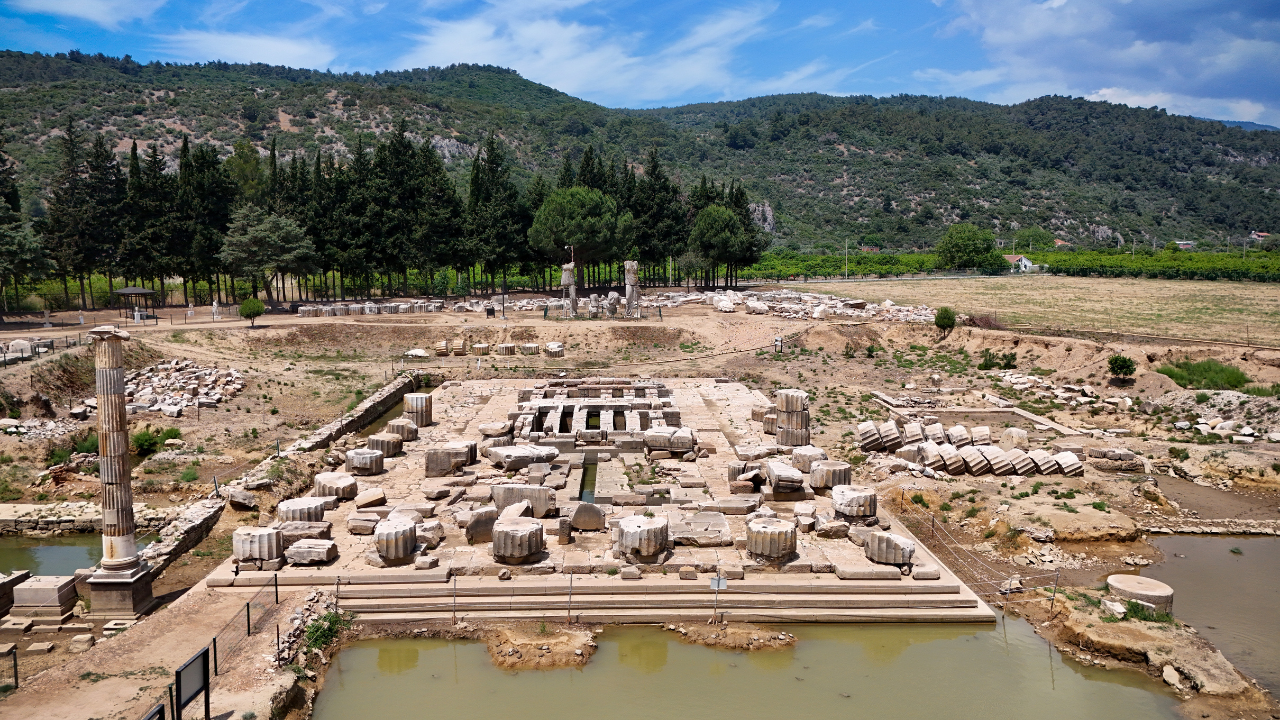
The Temple Apollo at ClarosThe Sacred Way at Claros A turtle's paradiseInscriptions Adjacent to the Alter of Apollo at Claros The Holy Family of Leto, Apollo & ArtemisThe Katagogeion at ClarosForked cross motifs reveal that
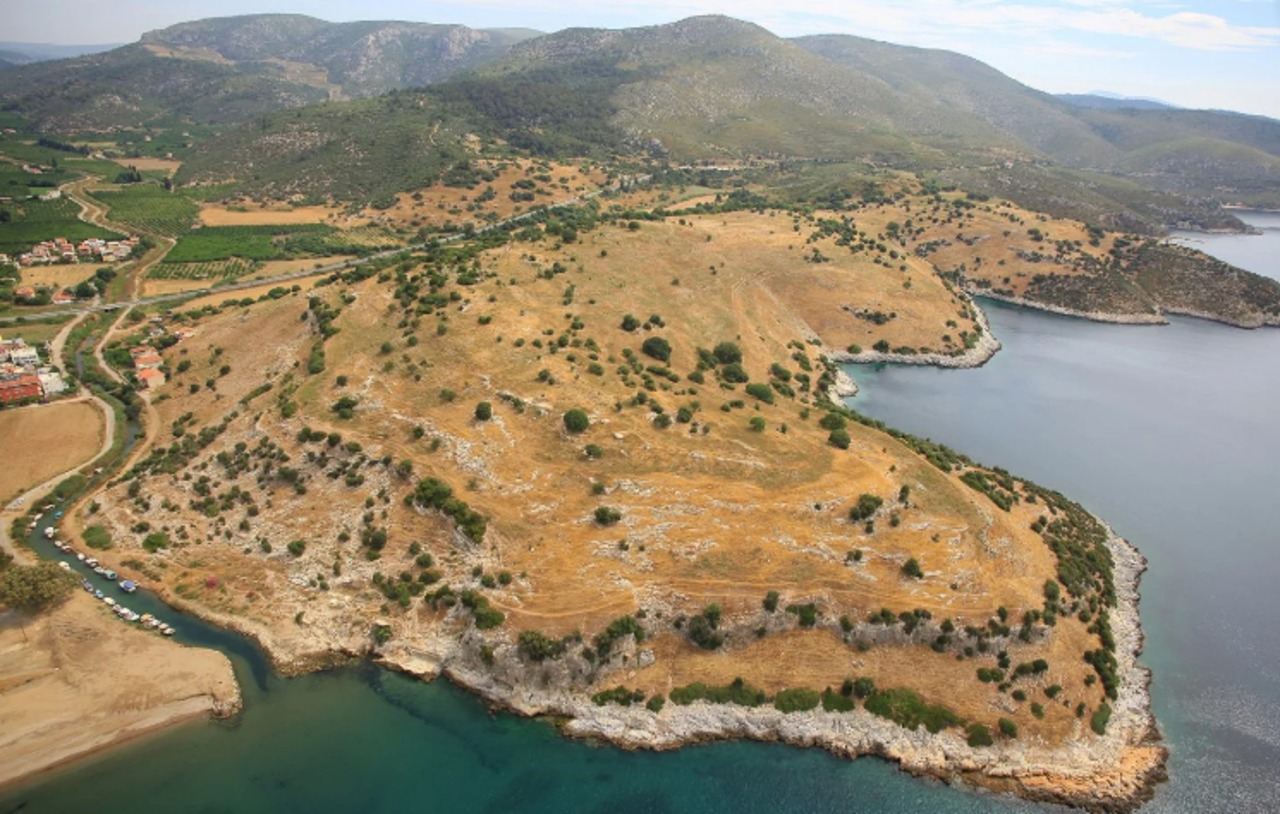
Claros continued to serve after ChristianityClaros was one of the sacred oracle sites near Ephesus, where people from all over Greece came to receive messages and guidance, beautifully nestled in nature.Notion was located on a hill from which the sea was visible; it served as a port for nearby Colophon and Claros (connected by a sacred way).
Claros is a prophecy center of Colophon, one of the twelve Ionic cities. Claros is built between two cities; it is 13 kilometers south of Colophon and two kilometers north of Notion.
The Temple of Apollo here was a very important center of prophecy as in Delphi and Didim. The oldest information about this sacred site goes back to the sixth and seventh centuries B.C. through the Homeric Hymns.
A sacred cave near the Claros Temple of Apollo, which was an important place both in the Hellenistic and Roman eras, points to the existence of a Cybele cult in earlier periods here.
Terracotta figurines representing different goddesses were found in the sanctuary of the sector of Artemis: they indicate various cults related to the main worship of Apollo. The most popular of the female divinities is Aphrodite, represented in different iconographic types. An additional major group consists of kourotrophoi (Κουροτρόφος), who recalls the role of Artemis as protector of childhood. A Kybele is probably linked with the cave where the goddess was worshipped near the sanctuary.
During recent excavation seasons (2015) at the Apollo sanctuary at Claros approximately fragments of votive terracotta fgurines have been found. Some of them represent female deities: among them, Aphrodite (1-4), Cybele (7) and kourotrophoi (5-6) that possibly represent Artemis and the Nymphe Nysa (?) could be indentified.
Literature
Visiting Goddesses? Female Deities in the Sanctuary of Apollo at Claros, Elçin Doğan Gürbüzer
Terracotta figurines representing different goddesses were found in the sanctuary ofthe sector of Artemis: they indicate various cults related to the main worship of Apollo.
Towards a Typology of Sanctuary Networks: The Case of Roman Claros , Ian Rutherford
The Claros dossier is unique in the Roman Empire. Sending delegations or theoriai to
sanctuaries is characteristic of the Classical and Hellenistic period.
The Officials of Oracular Sanctuaries in Roman Asia Minor, Aude BUSINE
Who were those who worked in the oracidar sanctuaries in the Roman East äs interpreters of the god's will? What were their functions? What part did they act in society?