inviting transformation and integration.
Sacred Sites · Caria
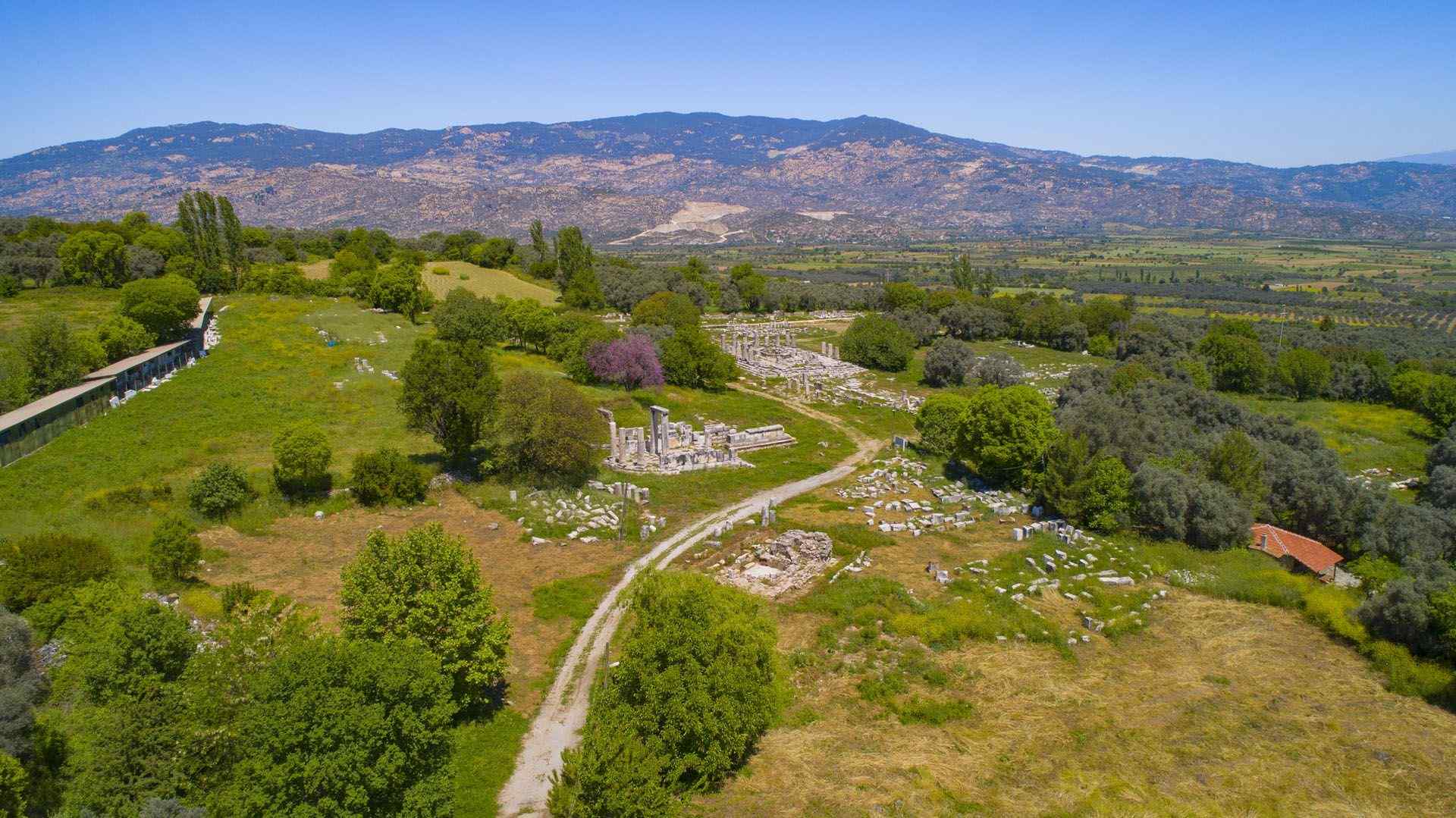
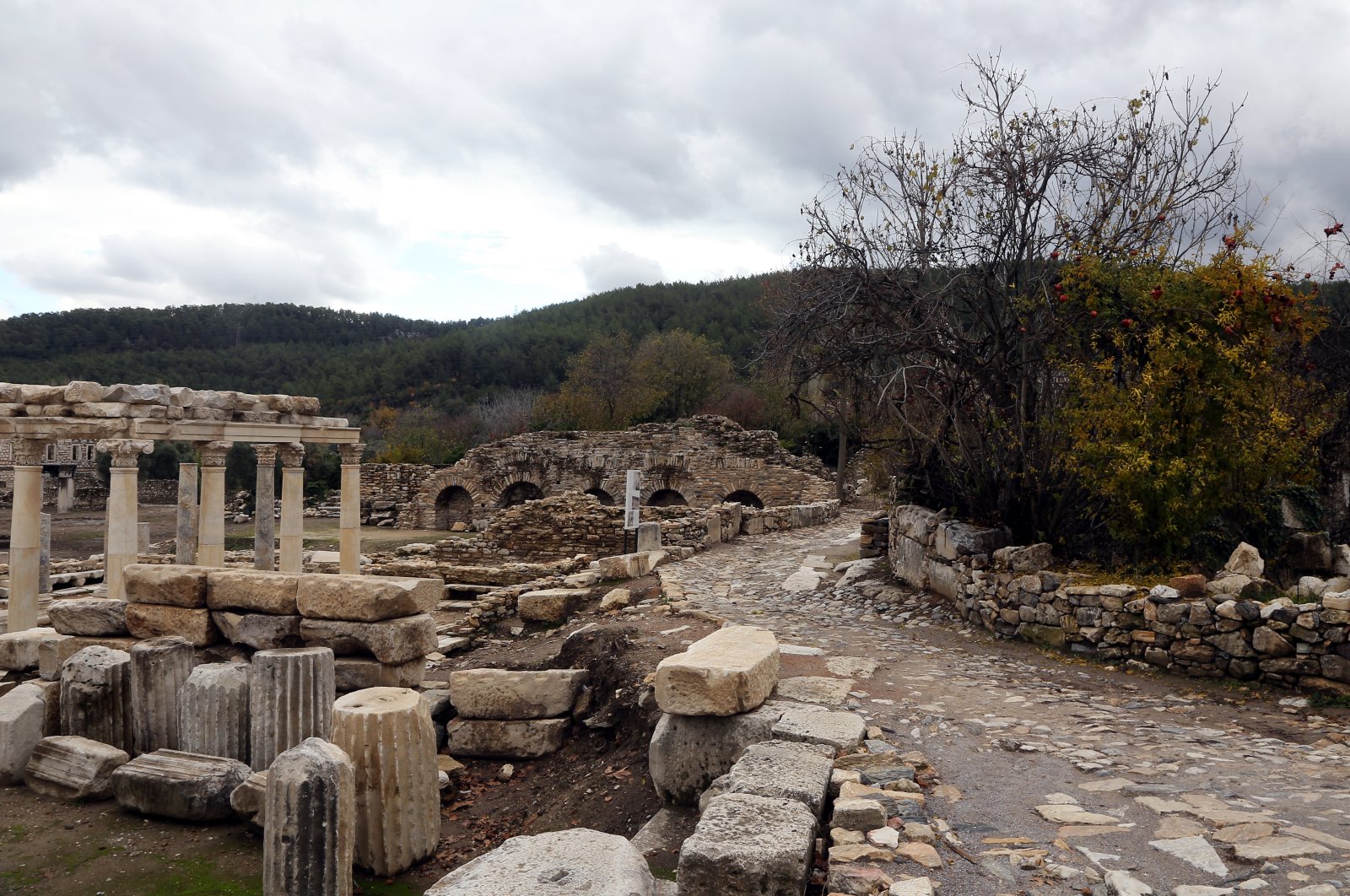
Near Yatağan, overshadowed by the thermal power plant, lie the ruins of the ancient sanctuary of Lagina. Their location, among surroundings heavily damaged by industry, paradoxically matches the character of the goddess once worshipped there: Hecate, the dark goddess of the underworld, of Anatolian origins.

- Where: near Yatağan, 8 km north of Stratonikeia as the crow flies
- Inhabited: since the Early Bronze Age, about 3000 BC
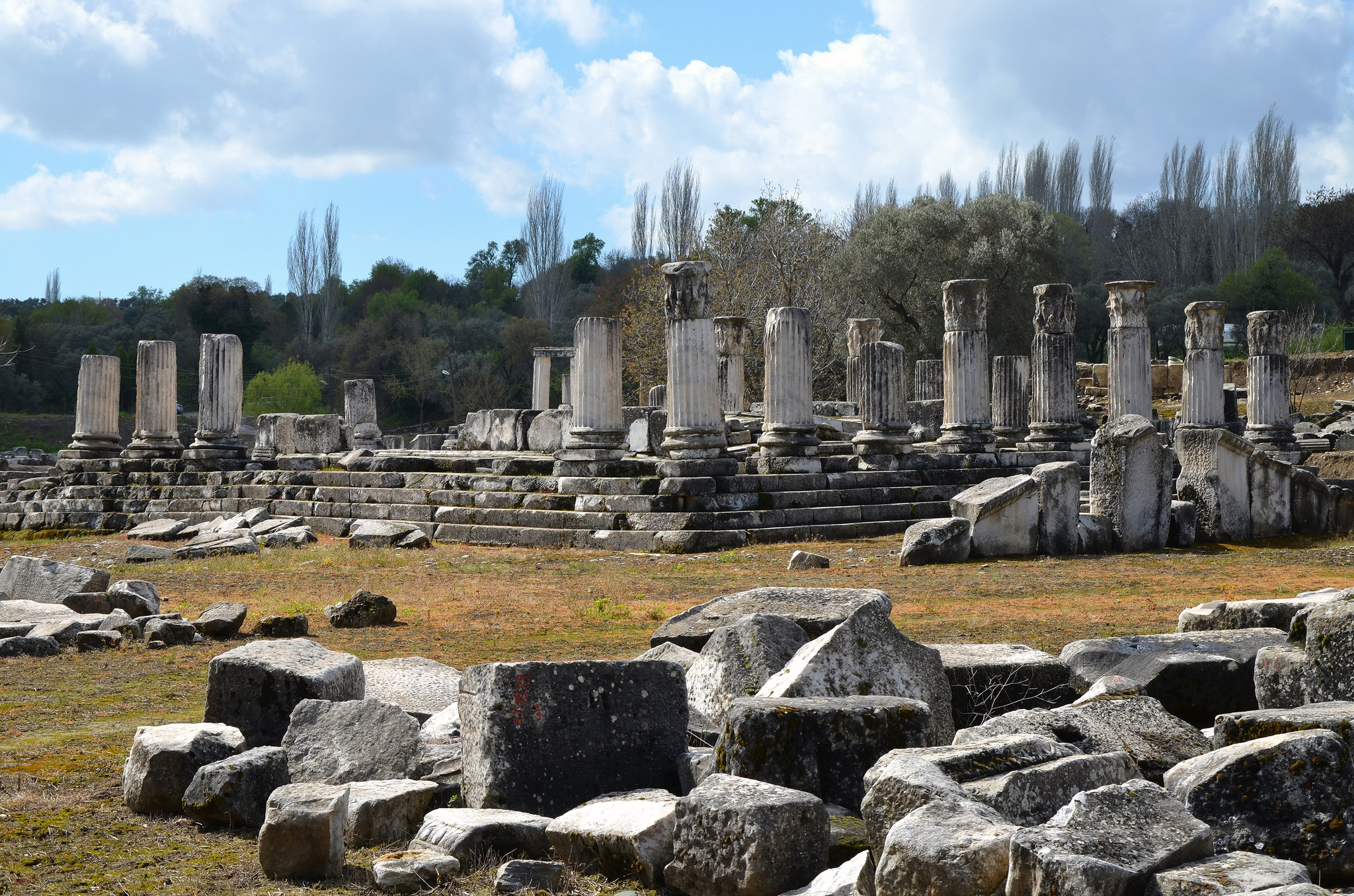
- Temple: 2nd century BC, Corinthian, 8 × 11 columns
- Festival: a procession carried the key from Stratonikeia to Lagina
- Excavated: first by Osman Hamdi Bey in 1891–1892
Older than its city
The sanctuary at Lagina itself is much older than its links with the Hellenistic city of Stratonikeia would suggest. Recent research indicates that the region has been continuously inhabited since the Early Bronze Age (3000 BC).
The Seleucid kings merely expanded the local sanctuary and transformed it into one of the most important religious sites in Caria. At the same time, they founded Stratonikeia, 8 kilometres to the south as the crow flies, as the political centre of the region. Every year, the people of Stratonikeia made pilgrimages to the Temple of Hecate in Lagina and the Temple of Zeus in Panamara.
The last great monument of the Ionic Renaissance
The Temple of Hecate, whose remains we can admire today, was built before the war with Aristonikos, who called himself Eumenes III, in 133 BC. It is considered the last great monument of the so-called “Ionic Renaissance”, which began in Caria under the Hekatomnid dynasty and also produced the Mausoleum at Halicarnassus.
In 188 BC the Treaty of Apamea gave control of Caria to the island of Rhodes, an ally of Rome. An inscription from this period shows that the chief priest of Hecate was also appointed priest of the Rhodian sun god Helios by a decree issued at Stratonikeia.
Lagina also flourished under Roman rule. Emperor Augustus himself donated a significant sum to rebuild the sanctuary after it was damaged in 40 BC by Quintus Labienus, a Parthian-backed rebel. This donation paid, among other things, for a new altar.
Lagina continued to develop until the catastrophic earthquake of AD 365. After that, the stoas fell into disuse and the central altar was badly damaged. As a sign of the new, Christian times, a large basilica was built between the altar and the temple, used from the 4th to the 6th century AD.
The goddess Hecate
The cult of Hecate was surrounded by mystery even in ancient times. She was not originally part of the Greek pantheon; Homer does not mention her at all. Most probably her cult had its origins in Asia Minor, perhaps even in Caria, where Lagina lies.
The earliest reference to Hecate in Greek literature is the Theogony of Hesiod (8th century BC), which describes her as a daughter of Perses and Asteria and so a descendant of the Titans. She does not belong to the twelve Olympians, but retains old privileges and is given new ones by Zeus.
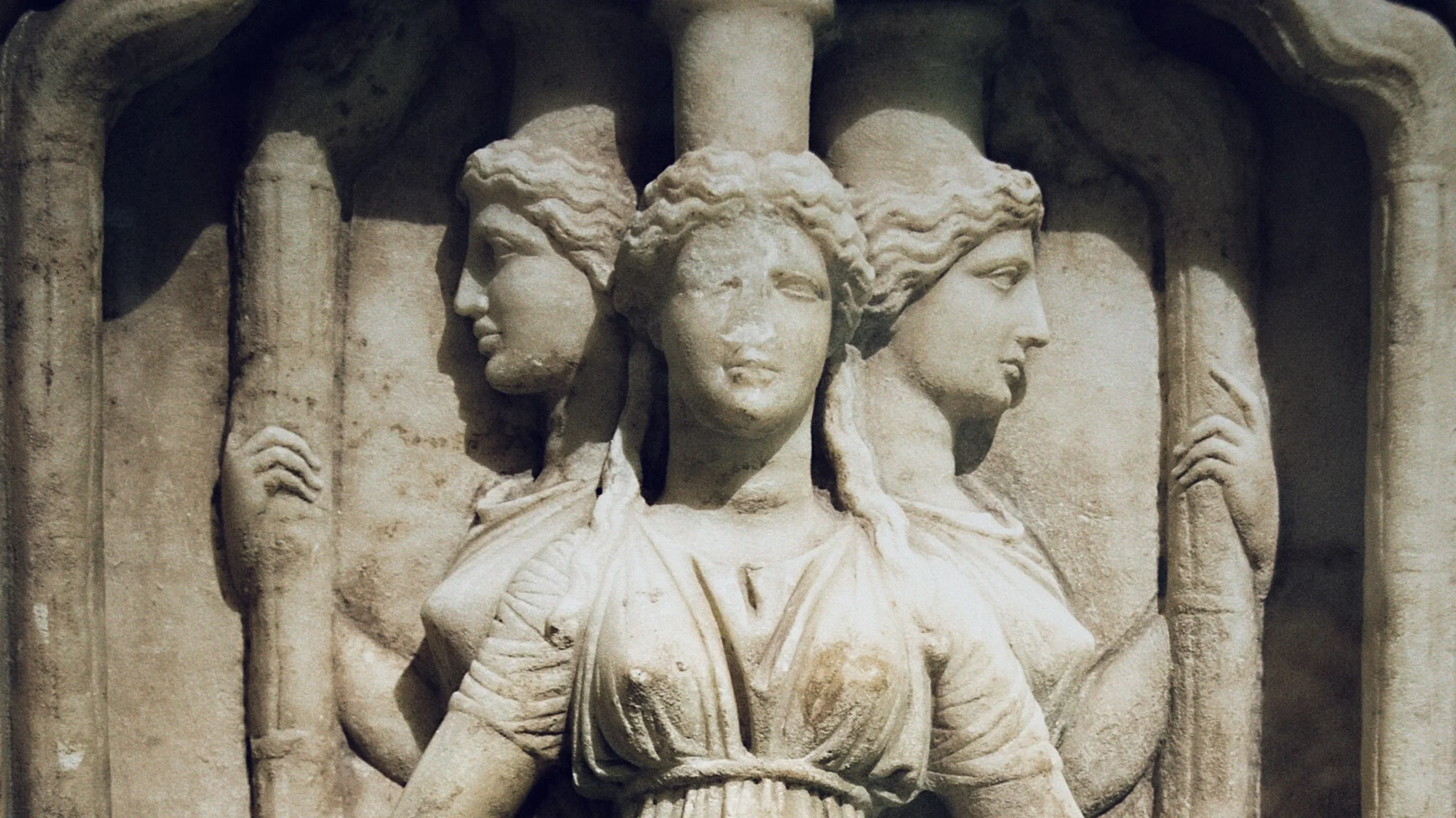
Her image changed over the centuries. Her oldest form was a friendly goddess, benevolent to people, granting success in contests, fishing and animal husbandry. With time she came to be seen as the protector of magic and sorcery, linked with the underworld, the mother of the first sorcerers, and the patron of crossroads, where her statues stood: a woman with three heads or three bodies.
Walking the sanctuary
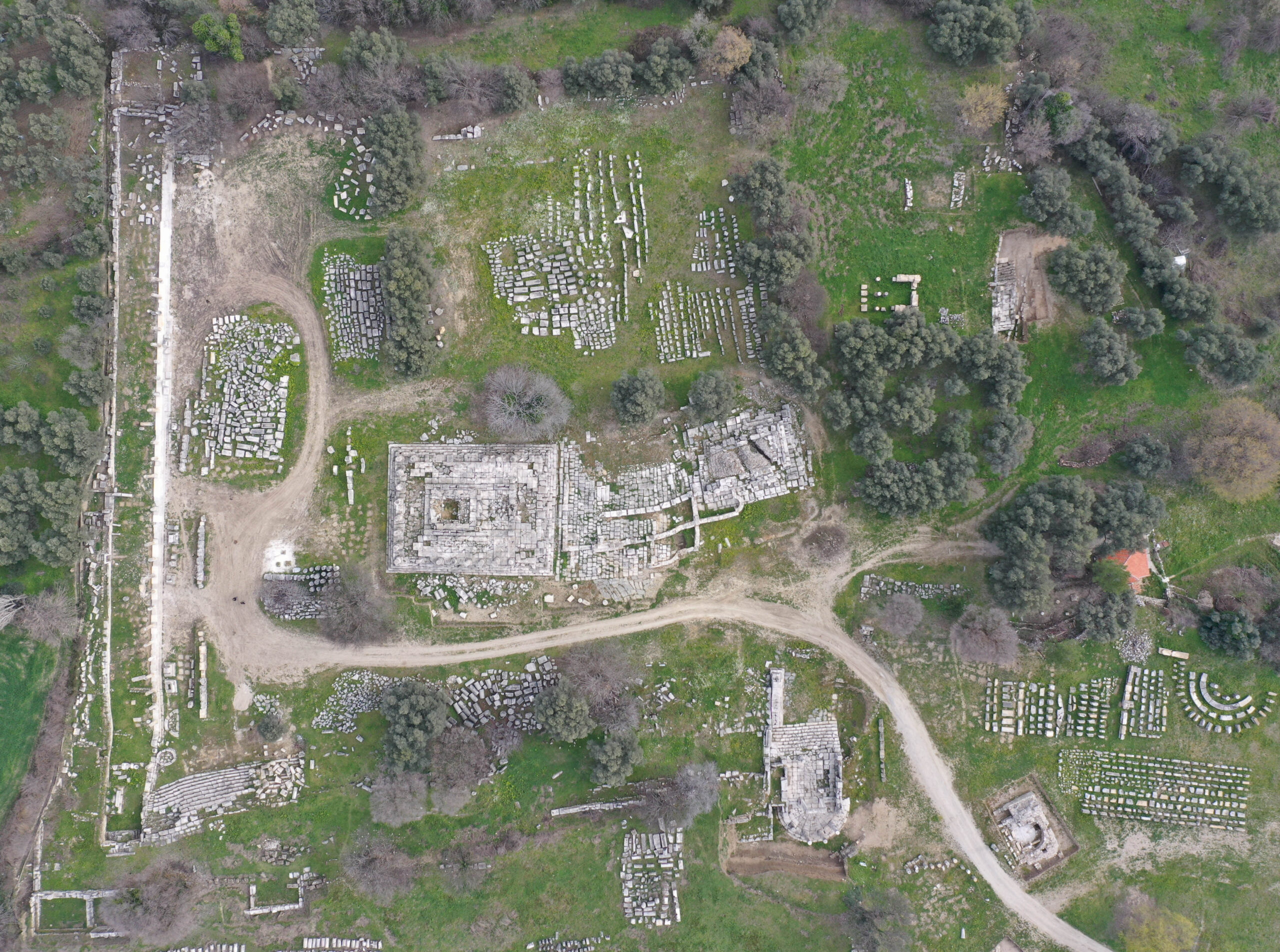
The sanctuary consists of the propylon (monumental entrance gate), the sacred way, the altar, the peribolos (the wall around the sanctuary), the Doric stoa and the temple of Hecate. The walls, up to two metres high, also form the back wall of the stoa.
Inscriptions on the walls of Lagina and in the bouleuterion of Stratonikeia show that the two places were joined by a Sacred Way. It began at the northern gate of the city and led through the necropolis, a fitting route for the goddess worshipped at its end. The same inscriptions describe the festivals: a procession carried the key to the temple from Stratonikeia to Lagina.
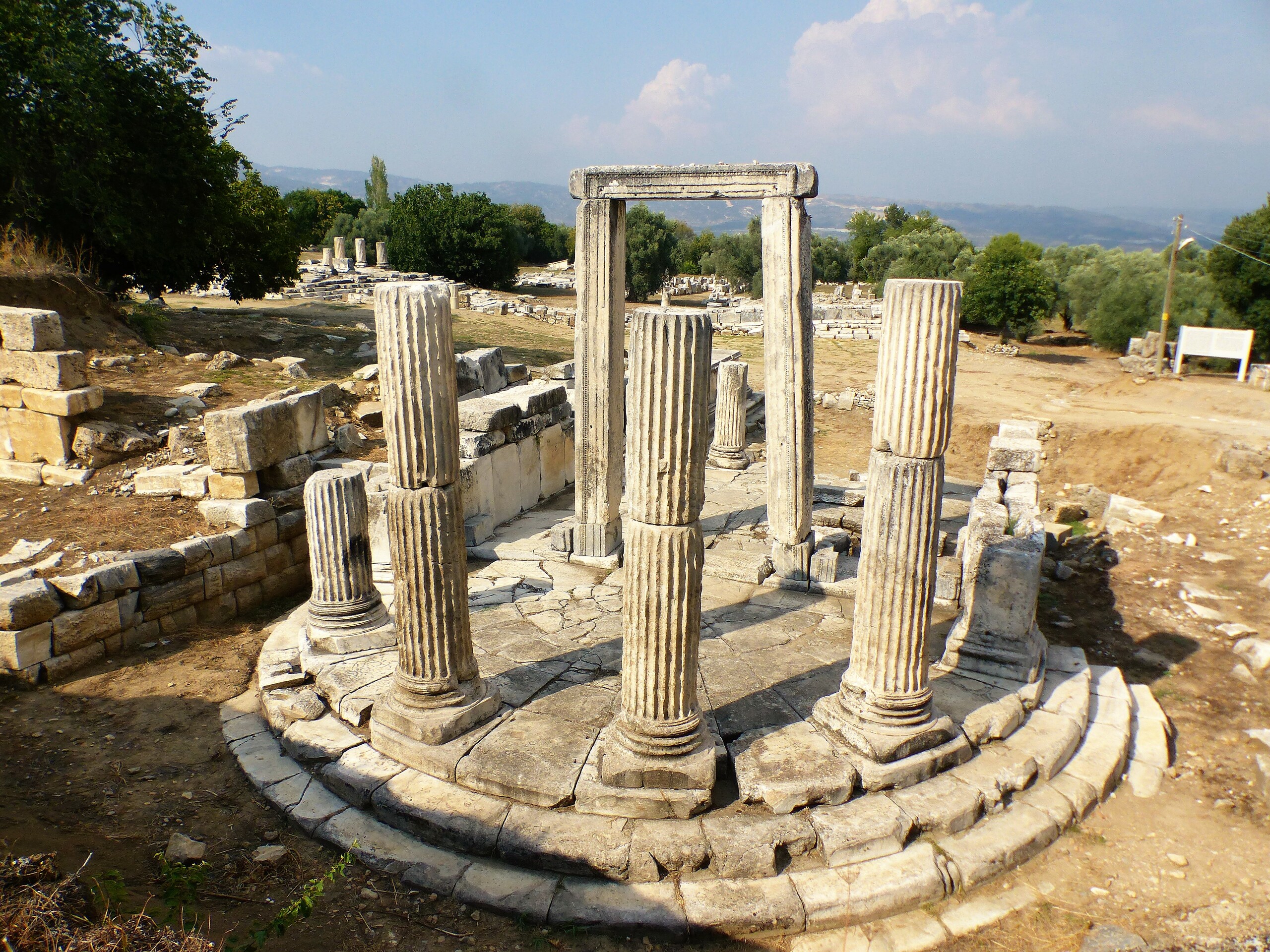
One entered through a monumental propylon with three gates and an apse supported by four Ionic columns. From the gate to the path leading to the altar there are ten flights of steps.
The temple, the Hekateion, stood at the centre of the sacred precinct. Its stylobate, the top step on which the columns stand, measured 21.30 by 28 metres. It was a pseudodipteros: a single ring of columns, eleven on the long sides and eight on the short, all Corinthian, set at the distance of two column spacings from the cella.
Rediscovery
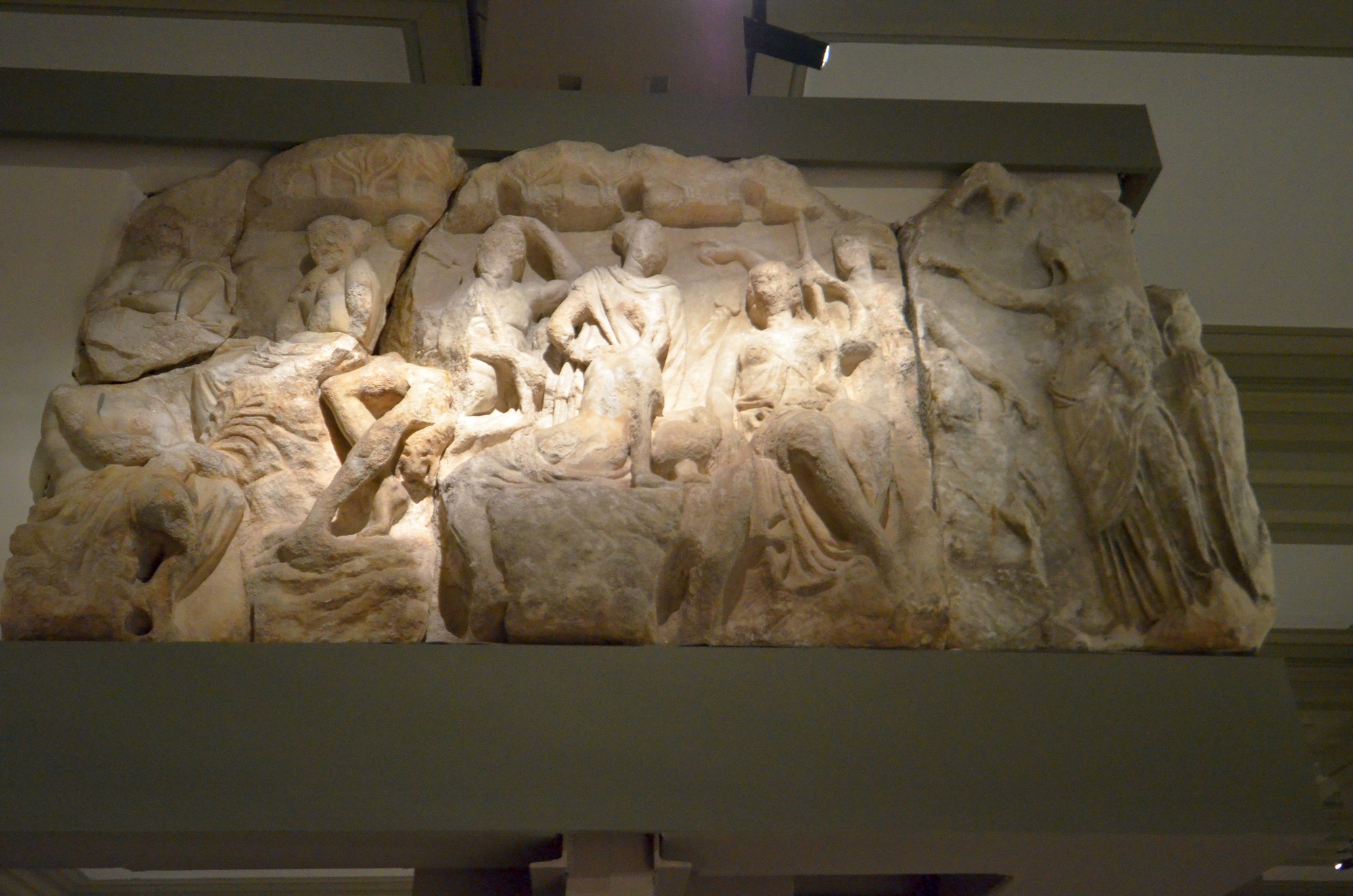
Abandoned and ruined, Lagina was often visited by European travellers in the 18th and 19th centuries. In 1856 the British archaeologist Charles Thomas Newton found more than thirty inscriptions and nine decorated frieze blocks, and his publications drew scholars to the site.
In the history of archaeology, Lagina is remembered as the place where the first Turkish archaeological team worked, led in 1891–1892 by the “father of Turkish archaeology”, Osman Hamdi Bey, together with Halil Edhem Bey. In nearby Turgut the house where Osman Hamdi Bey stayed still stands.
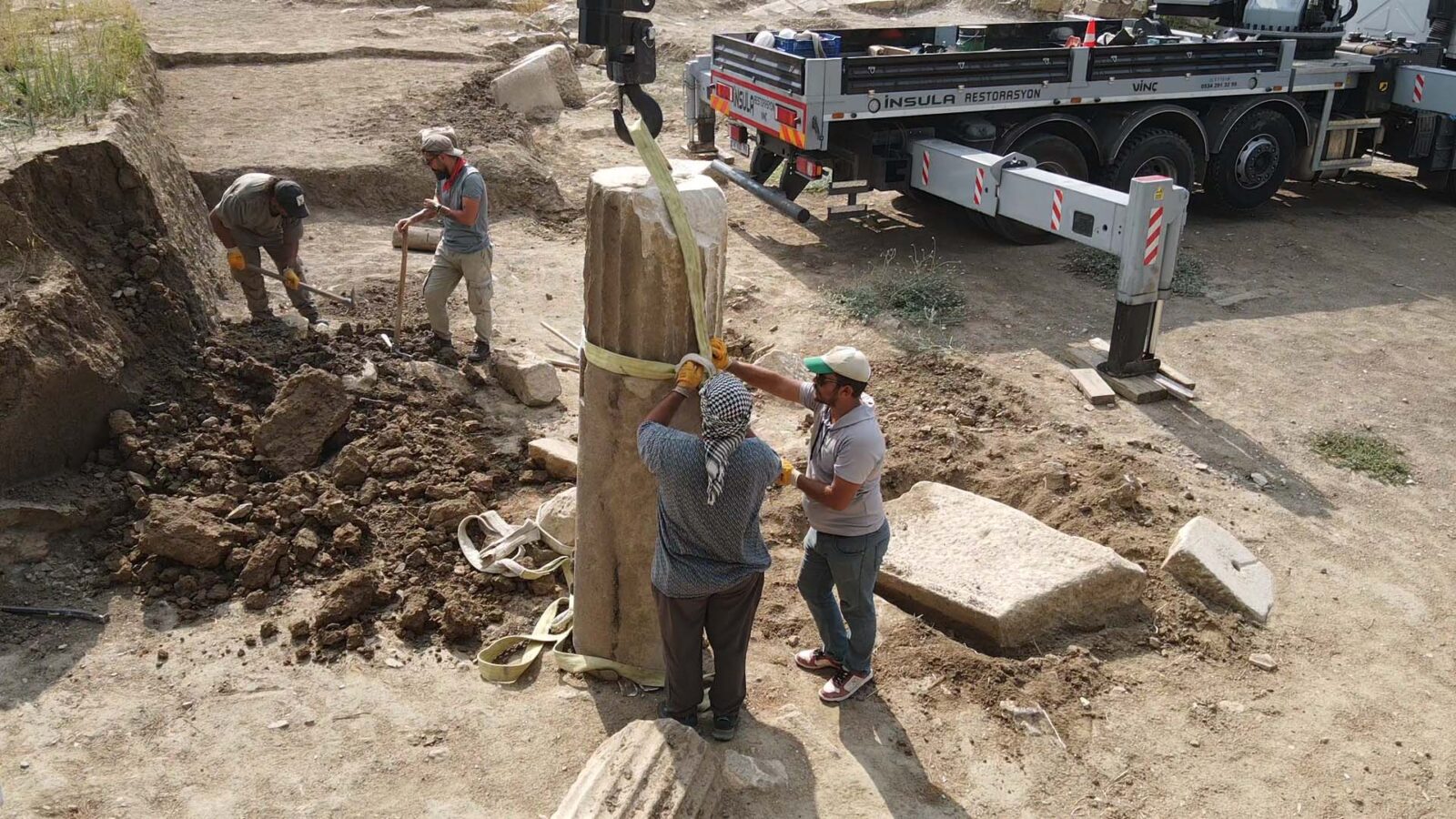
Work resumed in 1993 under the Muğla Museum, with an international team led by Professor Ahmet Adil Tırpan of Selçuk University in Konya. Today excavation and reconstruction are led by Professor Bilal Söğüt, who also directs the work at Stratonikeia. In 2020 columns of the temple were re-erected, and in 2024 he announced the continuation of the project to return the temple’s blocks, found after 2,100 years, to their original places.
Text source: Izabela Sobota-Miszczak, adapted.


