
City of Ephesus
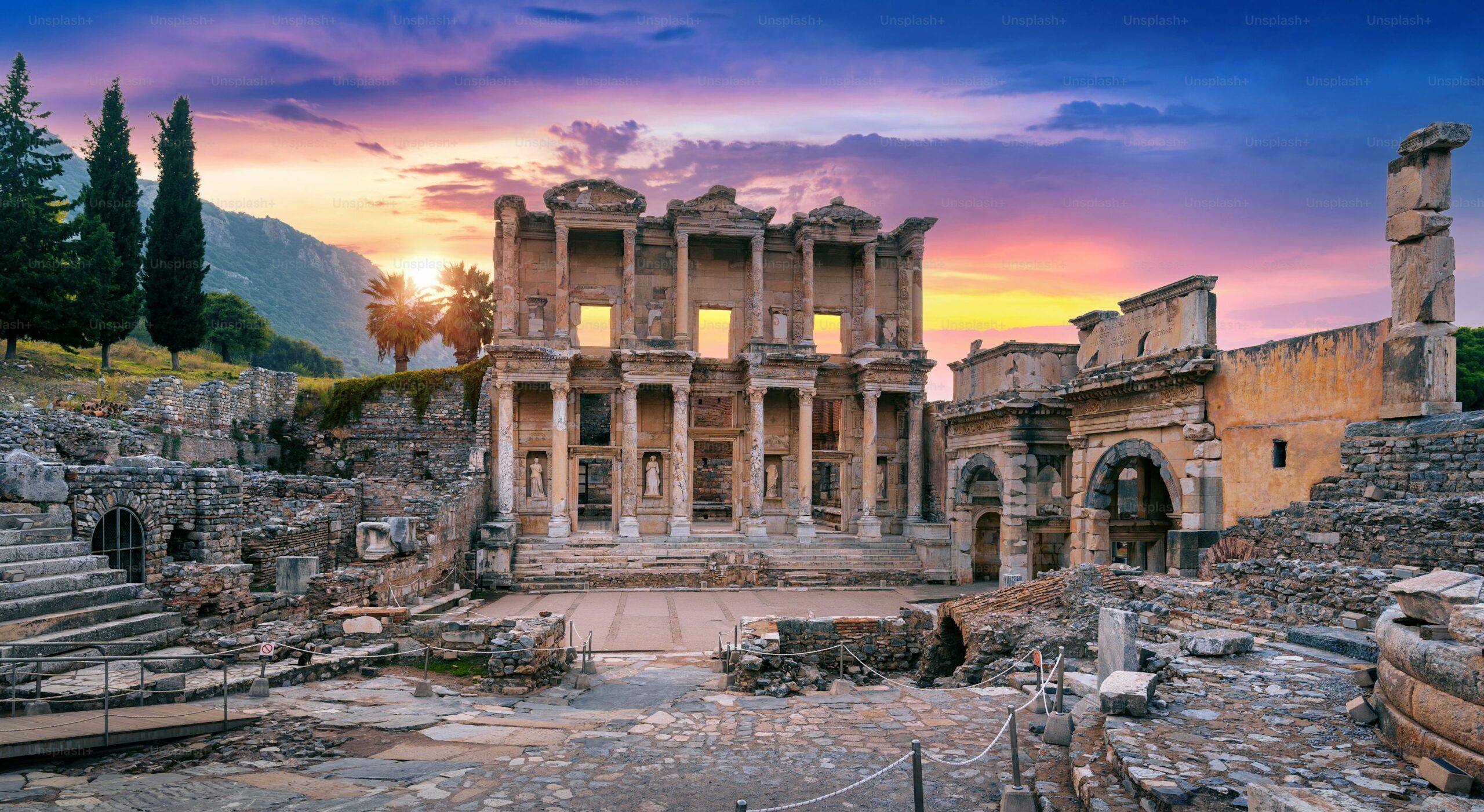
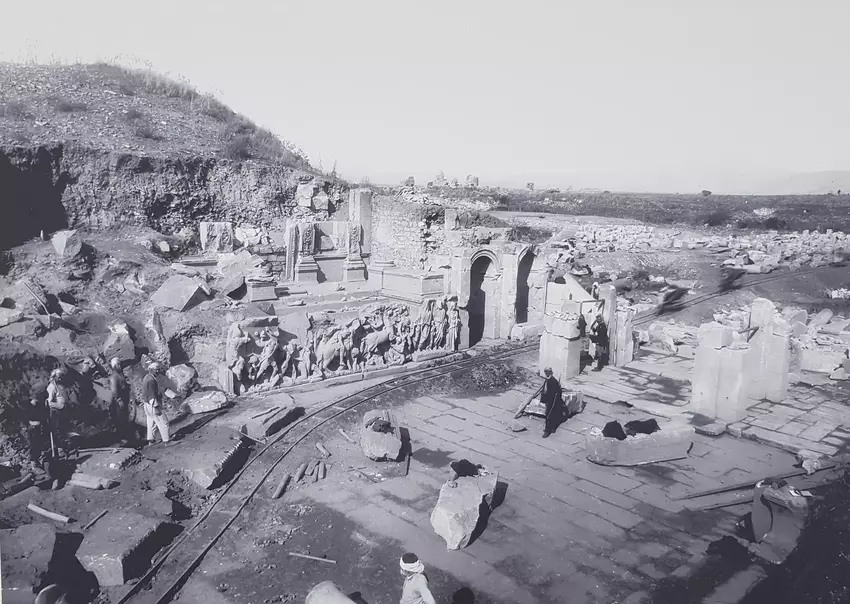
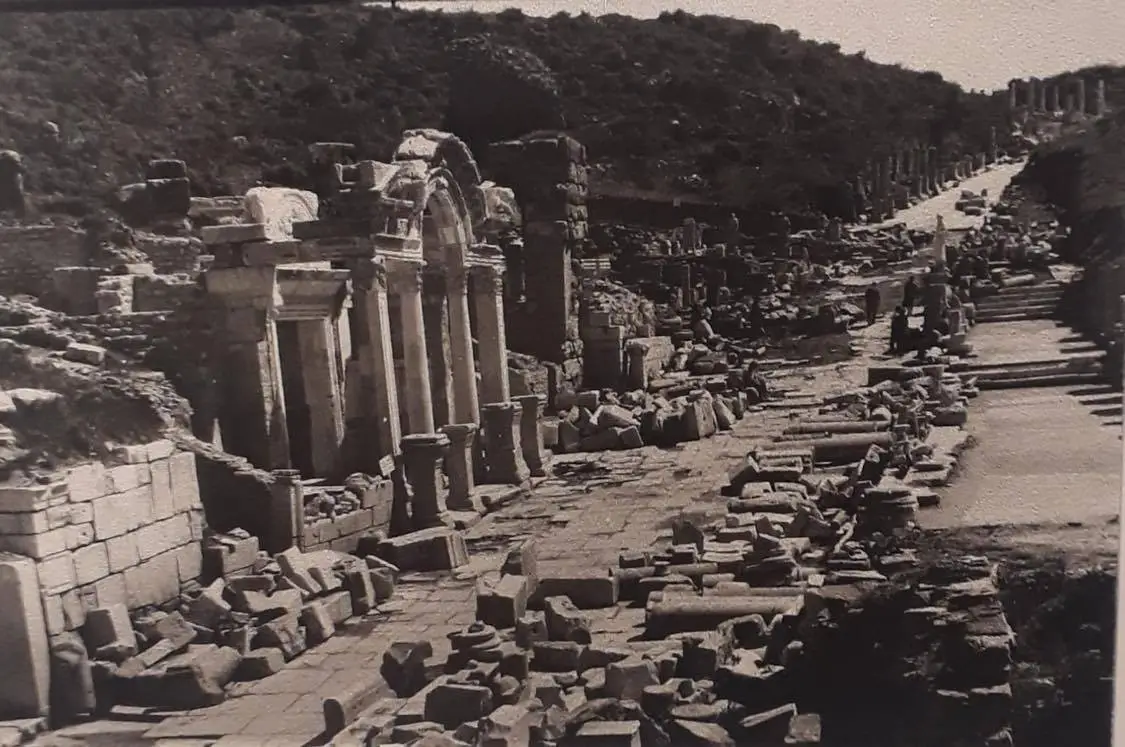
The city of Ephesus was rediscovered through archaeological efforts that began in 1863 when British engineer John Turtle Wood started searching for the Temple of Artemis.
Ephesus: A Brief Historical Overview
Location and Early Significance
Ephesus was the leading Greek city of Ionian Asia Minor. Its ruins lie near modern Selçuk in western Turkey. In antiquity, it stood close to the Aegean and controlled major trade routes into the interior, making it a major commercial and cultural center.
Prehistoric and Bronze Age Origins
Settlement at Ephesus goes back to the Neolithic period (around 6000 BCE). Archaeological finds show continuous habitation, including during the Hittite period. At that time, the city was known as **Apasas**, capital of the kingdom of **Arzawa**, indicating the site’s early political and religious importance long before the classical Greek city.
From Archaic to Classical Greece
In the mid-7th century BCE, Ephesus survived attacks by the Cimmerians, unlike nearby Magnesia. In the early 6th century it was ruled by tyrants and fell under the dominance of Croesus, king of Lydia, who, despite asserting control, sponsored a lavish rebuilding of the Temple of Artemis (Artemiseum), later famed as one of the Seven Wonders of the Ancient World. Around this time, the population began moving from the hills down into the plain.
Ephesus later came under Persian rule and figured in the Ionian Revolt (499–493 BCE), serving as a base for the attack on Sardis. After the revolt, it maintained relatively good relations with Persia:
– Xerxes honored Artemis at Ephesus in 478 BCE.
– Themistocles passed through Ephesus in the 460s on his way into Persian exile.
By 454 BCE, Ephesus was a tributary of the Athenian Empire . Notable early citizens included:
– Callinus, an early elegiac poet.
– Hipponax, a satirist.
– Heraclitus, the philosopher famous for his doctrine of constant change.
Greek Power Politics and Macedonian Control
During the Peloponnesian War, Ephesus joined the revolt against Athens in 412 BCE, sided with Sparta, and later served as a base for King Agesilaus in 396 BCE. It later switched to an anti-Spartan league under Conon, but in 387 BCE the city was again handed to Persia.
A pro-Persian tyranny under Syrphax ended in 333 BCE when Alexander the Great captured Ephesus and the tyrants were executed. Over the next decades, the city experienced shifting control until the Macedonian general Lysimachus decisively reshaped it around 300–286 BCE.
Hellenistic Rebuilding and Prosperity
Lysimachus relocated Ephesus around the hills of Coressus and Pion, brought in new settlers from Lebedus and Colophon, and briefly renamed it Arsinoe.
This planned Hellenistic city, with broad streets and major public buildings, marked the start of Ephesus’s greatest prosperity.
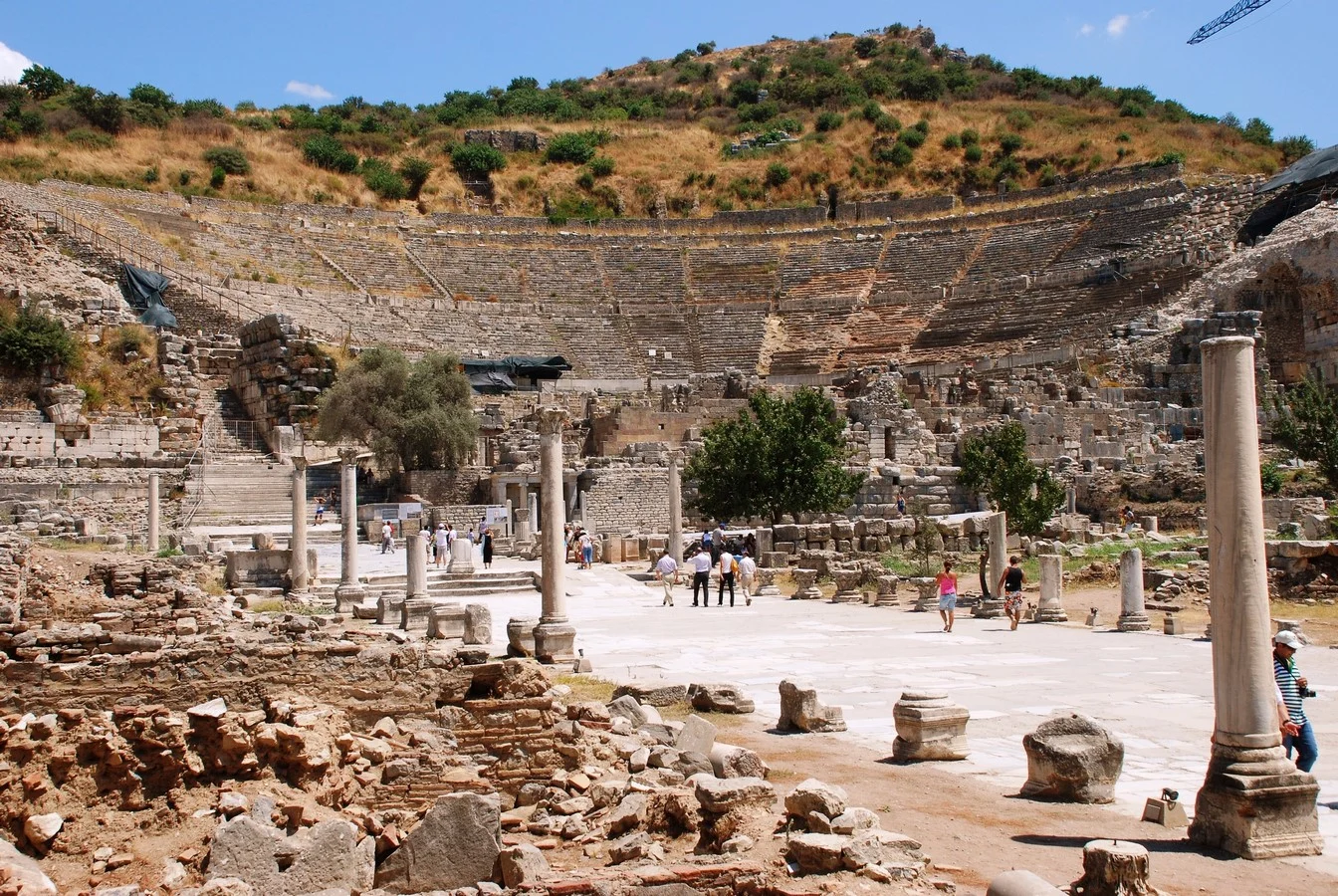
The Great Theater and other large structures were laid out in this period, and the city’s abundant coinage reflects its economic strength. Throughout, the cult of Artemis remained central, and the Temple of Artemis continued to serve as both a religious and financial center, projecting Ephesian prestige across the Mediterranean.
Ephesus Under Roman Rule
Geography and Harbor
In Roman times, Ephesus lay on the northern slopes of Coressus and Pion south of the Cayster (Küçükmenderes) River. When the Temple of Artemis was founded (about 600 BCE), it stood near the seashore, about a mile east-northeast of Pion. Over centuries, river silt created a fertile plain but steadily pushed the coastline westward.
Roman engineers maintained a sea channel to the harbor west of Pion with increasing difficulty. By late Byzantine times the channel was unusable, and by the modern era the coast lay several miles farther west. Despite this, in its prime Ephesus controlled the main trade route up the Cayster valley and had easy access to the Hermus (Gediz) and Maeander (Büyük Menderes) valleys, anchoring its role as a commercial hub.
From Pergamum to Rome
After Antiochus III of Syria was defeated in 189 BCE, Rome handed Ephesus to the **king of Pergamum**. When **Attalus III** died in 133 BCE, he willed his kingdom, including Ephesus, to Rome.
In 88 BCE, **Mithradates VI of Pontus** provoked a revolt in Asia Minor. Ephesians joined the massacre of resident Romans, even killing those who had taken refuge in the Artemiseum. When Rome reasserted control, Sulla imposed a heavy fine, dismissing Ephesian claims that they had acted under duress.
Despite backing the wrong side in later Roman civil wars and facing competition from Pergamum and Smyrna, Ephesus emerged under Augustus as the capital and foremost city of the Roman province of Asia.
The geographer Strabo praised its commercial importance. Monumental building flourished:
– A triumphal arch (3 BCE).
– An aqueduct (4–14 CE).
– Numerous streets, baths, temples, and public buildings, making Ephesus a prime example of a Roman imperial city in Greek lands.
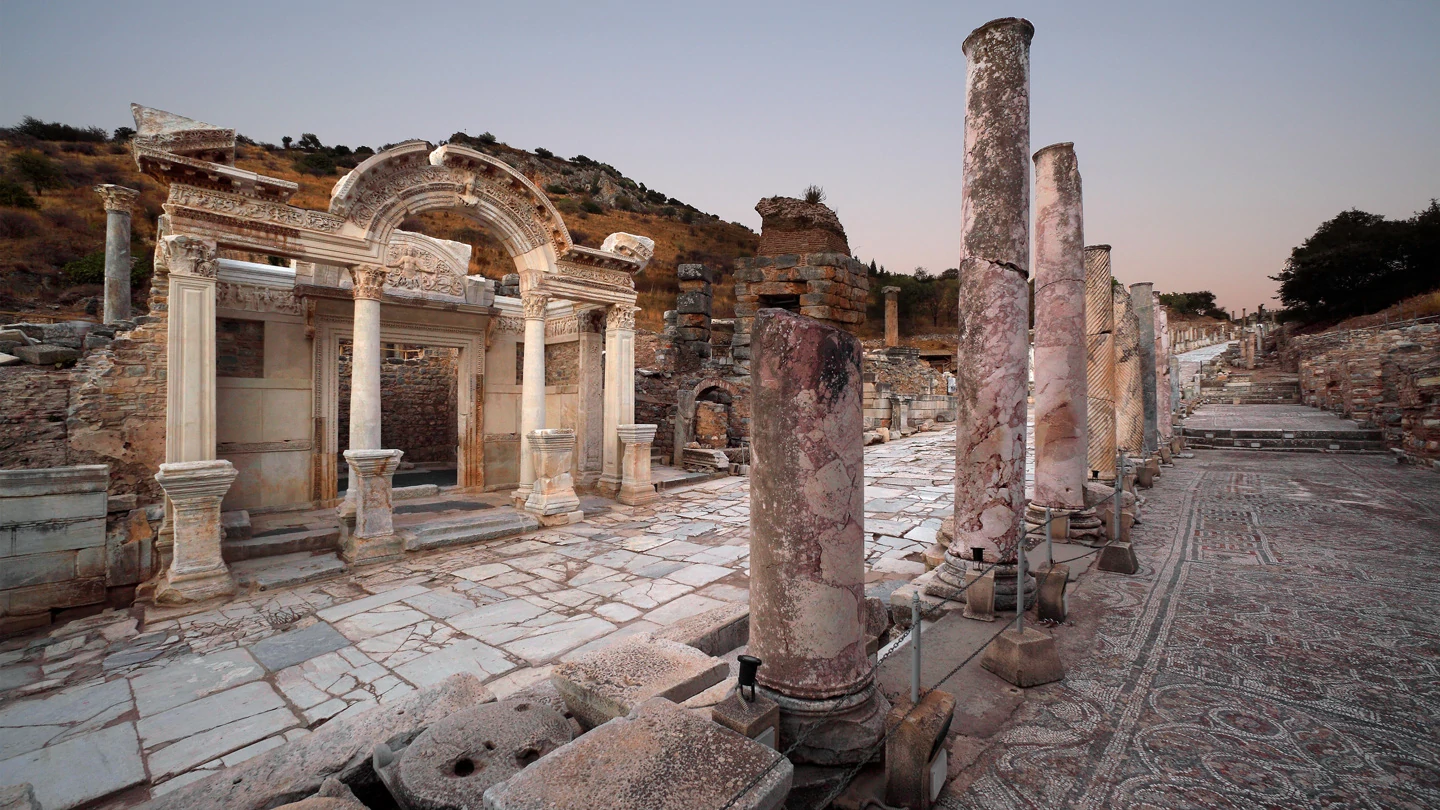
Among its notable Roman monuments is the richly decorated Temple of Hadrian (2nd century CE), still visible today.
Ephesus and Early Christianity
Ephesus became an important early Christian center:- Around 57 CE, Acts 19 describes a major disturbance in the theater when artisans who made shrines of Artemis rioted against St. Paul’s preaching.
– Local tradition holds that Ephesus was the last earthly home of the Virgin Mary, brought there by St. John, and perhaps Mary Magdelena.
– A weaker tradition associates St. Luke with the city as well.
– Ephesus was one of the seven churches of Asia addressed in the Book of Revelation.
In 431 CE, the Council of Ephesus met in the great Church of St. Mary and condemned Nestorius, affirming the title of Mary as Theotokos (Mother of God)—a key event in Christian doctrinal history.
The legend of the Seven Sleepers of Ephesus, Christian youths said to have miraculously awoken centuries after persecution, also spread widely and became the focus of a popular cult.
Decline, Byzantine Period, and Rediscovery
In 262 CE, a Gothic raid devastated Ephesus and destroyed the Temple of Artemis. The city and temple never regained their earlier splendor, though some major works followed:
– Constantine built new public baths.
– Arcadius rebuilt the main street from the theater to the harbor at a higher level (the Arcadiane).
– In the 6th century, Justinian constructed the grand Basilica of St. John.
As the harbor silted up, Ephesus lost its maritime role. By the early Middle Ages it had declined into a small town.
In 1090, the Seljuqs captured the reduced city. It experienced a brief revival in the 14th century under Turkish rule but was ultimately abandoned. Over time, even the exact site of the Temple of Artemis was forgotten.
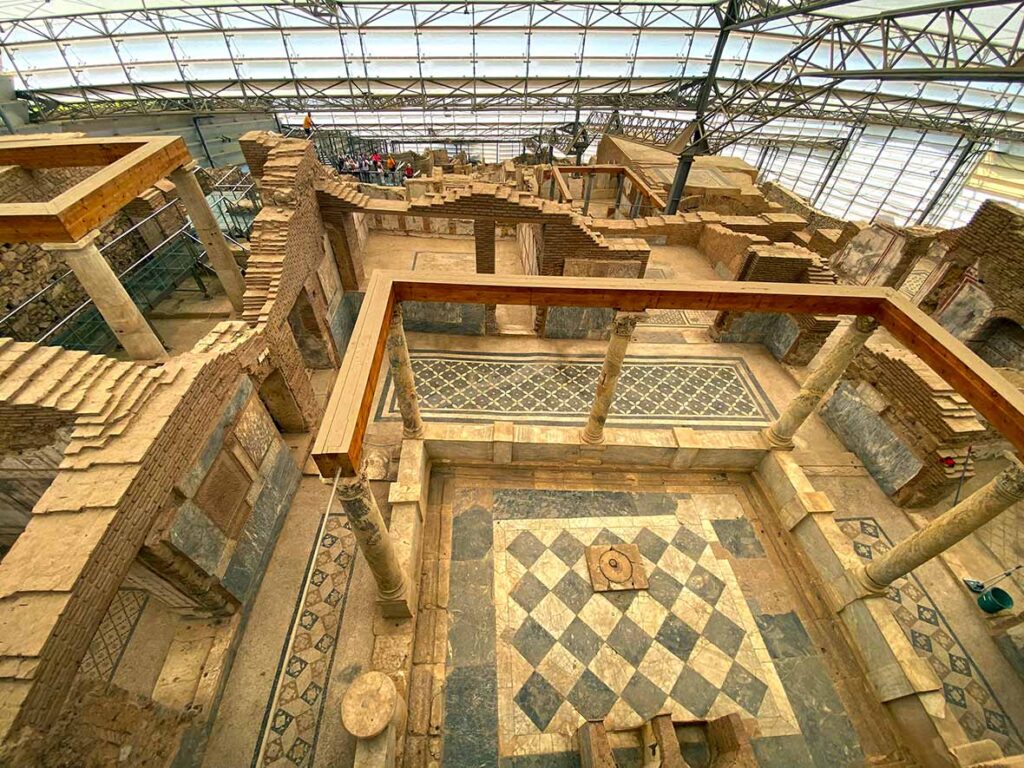
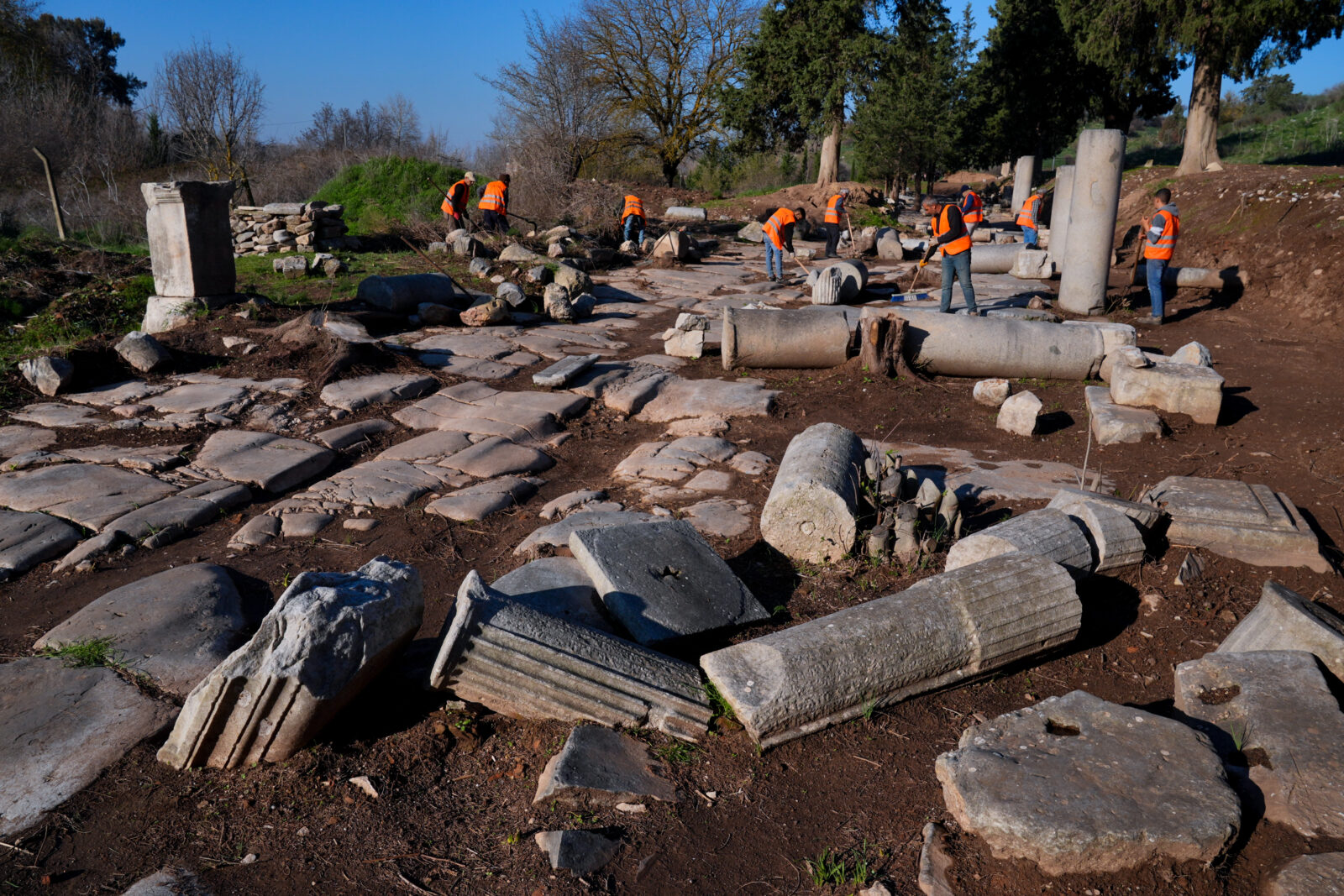
Its location was finally confirmed in 1869, when excavations uncovered the foundations of the Artemiseum. Ongoing archaeological work has since revealed streets, theaters, temples, and houses, allowing a clear picture of Ephesus’s long evolution from prehistoric settlement to one of the greatest cities of the ancient Mediterranean.


